top of page
  • oliviasophiahere
  • Oct 16, 2025
  • 4 min read

If you’re planning to study or work in an English-speaking country, taking the IELTS Academic test is one of the most important steps in your journey. Singapore, being a global education and business hub, offers an excellent testing environment with multiple centers, flexible schedules, and professional facilities. Whether you’re applying to a university, pursuing professional registration, or enhancing your English proficiency, understanding how to take the IELTS Academic Singapore test will help you prepare effectively and achieve your desired score.

Understanding the IELTS Academic Exam


The IELTS (International English Language Testing System) is one of the world’s most trusted English language proficiency tests. It’s accepted by over 11,000 organizations globally, including universities, immigration authorities, and professional bodies.


The IELTS Academic version specifically assesses whether your English skills are suitable for an academic or professional setting. It evaluates your abilities across four sections:


  • Listening – Understanding spoken English in various academic contexts.

  • Reading – Comprehending complex academic texts and identifying main ideas.

  • Writing – Summarizing visual data and writing essays with clear arguments.

  • Speaking – Demonstrating fluency, pronunciation, and coherence in conversation.


Each section is scored on a scale of 1 to 9, and your overall band score is the average of the four.


Step 1: Choose the Right IELTS Test Type


Before registering, make sure you’re selecting the correct test type.


  • IELTS Academic – For university admission, professional registration, and higher education.

  • IELTS General Training – For work, migration, or secondary education purposes.


Since you’re focusing on academic or professional advancement, you’ll need the IELTS Academic Singapore test.


Step 2: Find an Authorized IELTS Test Center in Singapore


Singapore offers several authorized IELTS test centers operated by British Council and IDP Education. These centers are located in convenient locations such as Orchard, Novena, and Tanjong Pagar.


When selecting a test center, consider the following:


  • Test format options: Choose between IELTS on Computer or IELTS on Paper.

  • Available test dates: Computer-delivered IELTS often has more frequent sessions.

  • Accessibility: Pick a center that’s easy to reach via MRT or bus.


Both British Council and IDP maintain high testing standards, ensuring a smooth and fair examination process.


Step 3: Register for the IELTS Academic Test


You can easily register for the IELTS Academic Singapore test online through the official websites of the British Council or IDP.


Here’s how to register:


  1. Visit the British Council or IDP Singapore website.

  2. Choose your preferred test type: IELTS Academic.

  3. Select your desired date and location.

  4. Complete your registration details.

  5. Pay the test fee (typically around SGD 365–410).

Once registration is complete, you’ll receive a confirmation email with details about your test date, venue, and timings.


Step 4: Prepare Effectively for the IELTS Exam


Preparation is the key to achieving a high band score. Here’s how you can get started:


1. Understand the Test Format


Familiarize yourself with the structure of each section. Take practice tests to get a feel for the timing and question types.


2. Build Core English Skills


Read academic journals, listen to English podcasts, and engage in English conversations daily. This helps improve your comprehension and fluency.


3. Take a Preparation Course


Joining a structured IELTS preparation course can make a huge difference. Expert instructors can provide valuable tips, conduct mock exams, and give feedback to strengthen your weak areas.


4. Practice Time Management


Each section of the IELTS has strict timing. Practice completing tasks within the allocated time to avoid rushing during the actual test.


Step 5: Know What to Expect on Test Day


Before the Test


  • Arrive at least 45 minutes early. Late arrivals may not be admitted.

  • Bring your passport or ID used during registration.

  • Personal belongings like phones and bags will be stored outside the test room.


During the Test


  • Listening (30 minutes): You’ll hear four recordings and answer related questions.

  • Reading (60 minutes): You’ll read three academic passages and answer 40 questions.

  • Writing (60 minutes): Task 1 involves describing data (chart, graph, etc.), and Task 2 is an essay.

  • Speaking (11–14 minutes): A face-to-face interview with an examiner, often held on a separate day.


After the Test


For computer-based IELTS, results are available in 3–5 days. For paper-based tests, results are released in about 13 days. You’ll receive an official Test Report Form (TRF) with your scores for all four sections and your overall band score.


ielts academic singapore

Step 6: Retake or Improve Your Score if Needed


If your result isn’t what you expected, don’t worry — you can retake the IELTS as often as needed. Review your performance, identify weak areas, and continue practicing. Some candidates also take advantage of IELTS preparation courses in Singapore to improve their band scores before retesting.


Why Take the IELTS Academic in Singapore?


Singapore’s well-equipped test centers, multilingual environment, and convenient scheduling make it one of the best places in Asia to take the IELTS exam. You’ll benefit from:


  • Reliable test administration by trusted organizations (British Council & IDP).

  • Excellent facilities with quiet and comfortable exam rooms.

  • Frequent test dates and easy access via public transport.


With these advantages, taking the IELTS Academic Singapore test is a straightforward and stress-free experience.


Final Thoughts


Preparing for the IELTS Academic Singapore exam doesn’t have to be overwhelming. By choosing the right test center, understanding the exam format, and dedicating time to structured preparation, you can confidently achieve your target band score.


For those seeking professional guidance, The Princeton Review offers a comprehensive IELTS course in Singapore. With expert instructors, personalized coaching, and extensive practice materials, Princeton Review helps you master all sections of the IELTS and reach your desired academic goals.
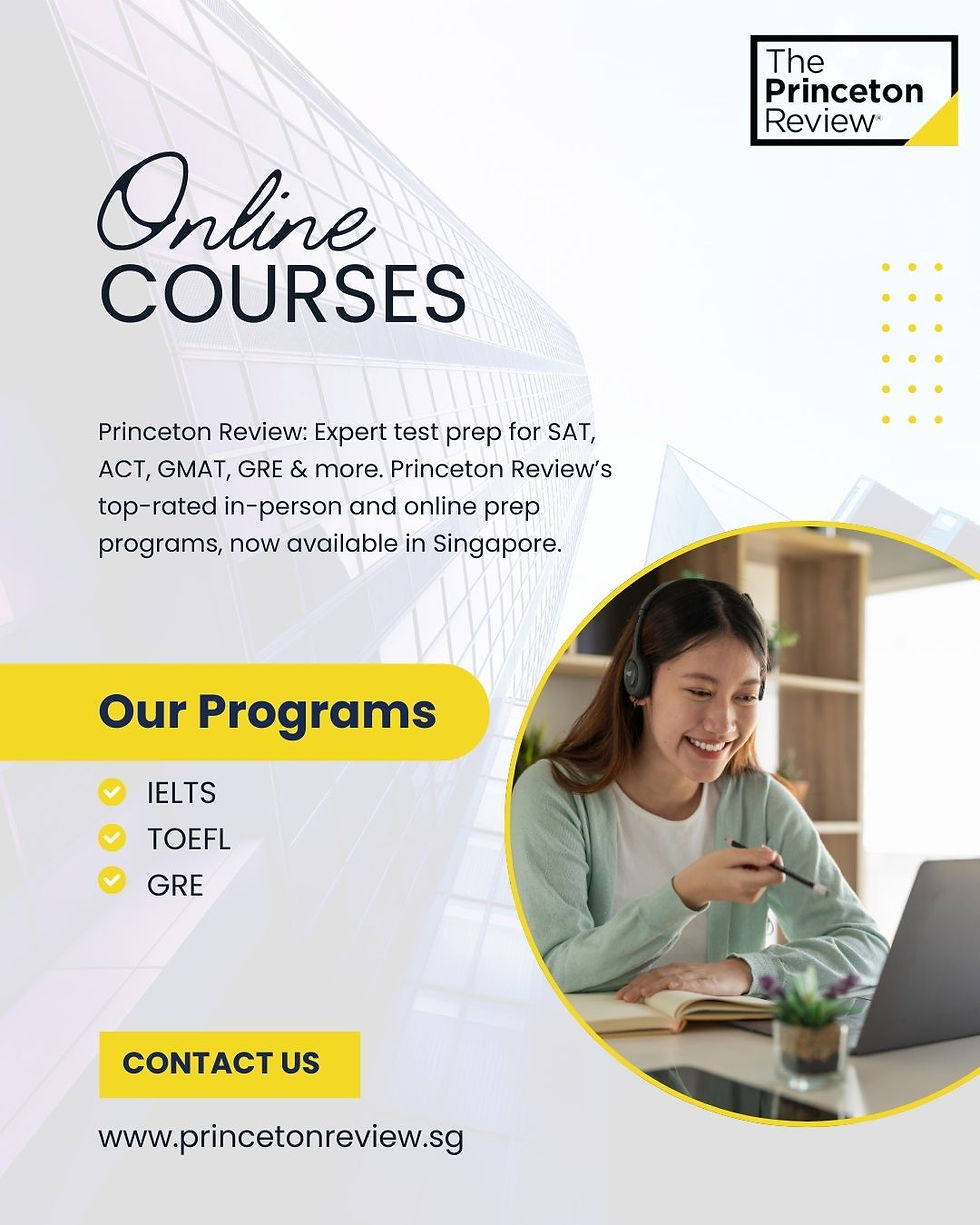


If you’re preparing for the IELTS exam, you’ve probably heard plenty of “tips” about the Listening section. Unfortunately, many of these are myths that can hurt your preparation more than help it. Whether you’re studying on your own or taking IELTS training in Singapore, it’s essential to separate fact from fiction to perform your best on test day.


Let’s debunk nine common myths about the IELTS Listening test, so you can approach it with clarity and confidence.


1. “You only need good English skills to score high in Listening.”


This is one of the most misleading beliefs. While having strong English comprehension helps, the IELTS Listening test also assesses your focus, note-taking, and attention to detail. Even fluent English speakers can lose marks if they miss keywords or get distracted.

That’s why structured IELTS training in Singapore is so valuable, it teaches test-specific strategies, like predicting answers and identifying distractors, that go beyond language skills alone.


2. “You can listen once and still catch everything.”


In the IELTS Listening test, you only hear each recording once. Many students assume they can understand everything easily, but even native speakers can miss information due to accents, speed, or distractions.

A good IELTS trainer helps you practice active listening techniques, such as anticipating the next answer and recognizing paraphrased terms. Consistent exposure to various accents, British, Australian, and American, also improves comprehension.


3. “All accents are British.”


A big misconception! IELTS Listening includes a variety of English accents because the test is used internationally. You might hear speakers from the UK, Australia, New Zealand, Canada, or the US.

Professional IELTS training in Singapore ensures you’re exposed to all of these accents so you don’t panic on test day when the speaker doesn’t sound “British enough.”


4. “You can write answers in any form.”


Wrong! The IELTS Listening test has strict answer format rules, for example, word limits, spelling accuracy, and grammar consistency. Even if your answer is correct in meaning, you could lose marks for minor errors.

That’s why guided IELTS practice under expert supervision helps. You’ll learn how to follow instructions precisely and avoid careless mistakes that can cost precious points.


5. “You don’t need to read the questions in advance.”


If you wait until the audio starts to read the questions, you’re already behind. Reading questions beforehand helps you understand what kind of information you’re listening for, numbers, names, or specific details.

During IELTS training in Singapore, trainers emphasize previewing questions and underlining keywords before the audio begins. This simple strategy drastically improves accuracy and focus.


6. “Practice tests alone are enough.”


Practice tests are important, but they’re not everything. Many students repeatedly take mock tests without analyzing their mistakes, which leads to stagnation.


The real progress comes from feedback and targeted improvement. When you take structured IELTS training, experienced instructors help you identify recurring errors, like missing plurals or confusing dates, and provide actionable tips to fix them.


7. “The Listening test is the easiest section.”


Many test-takers start with overconfidence because the Listening section comes first. However, maintaining focus for 30 minutes straight can be mentally exhausting.

Trained instructors teach techniques to stay alert throughout the recording and manage your time wisely. Treating the Listening section seriously from the start helps you score consistently across all modules.


8. “You can change your answers later.”


In the paper-based IELTS, you have only 10 minutes at the end to transfer your answers to the answer sheet. In the computer-based test, you get no extra time at all.

Believing you can fix everything later leads to rushed, incomplete answers. With proper IELTS coaching, you’ll learn how to record responses efficiently as you go, avoiding unnecessary time pressure.


9. “IELTS Listening is just about hearing words.”


Listening is not just about hearing, it’s about understanding context and relationships between ideas. Many recordings include distractors or extra details designed to confuse you.


Instructors at professional IELTS centers train you to recognize transitions like “However,” “On the other hand,” or “Actually,” which often signal the correct answer is coming, or has just changed.


ielts training in singapore

Why Choose Professional IELTS Training in Singapore?


Studying independently has its advantages, but professional guidance makes a noticeable difference. High-quality IELTS training in Singapore offers structured lessons, experienced tutors, and access to authentic practice materials that simulate real exam conditions.


The Princeton Review provides IELTS courses in Singapore that combine expert instruction with AI-powered tools for personalized feedback. Their trainers help students strengthen listening comprehension, master time management, and understand exam patterns deeply.


With tailored coaching and regular mock tests, students not only improve their listening skills but also gain confidence across all four sections of the IELTS exam.


Final Thoughts


Believing myths about the IELTS Listening test can sabotage your performance. Success comes from smart strategies, regular practice, and professional feedback.

If you’re serious about achieving your target band score, consider enrolling in structured IELTS training in Singapore, where expert instructors can help you avoid common pitfalls and build the skills that truly matter.


Remember: The IELTS Listening test isn’t about luck; it’s about preparation. And with the right training and mindset, you can listen your way to success.


  • oliviasophiahere
  • Sep 30, 2025
  • 3 min read

Preparing for the IELTS exam is an important milestone for students and professionals aiming to study, work, or migrate abroad. But before you hit the “Register” button, there are several crucial factors to consider. Many test-takers rush into registration without fully understanding the process, only to realize later that they weren’t fully prepared or could have chosen better resources.


If you’re searching for the right preparation support, whether through an IELTS tutor online or an in-person program, this guide will help you make smart decisions before registering for your IELTS exam.


  1. Understand Which IELTS Module You Need


One of the most common mistakes is registering for the wrong version of the IELTS. There are two:


  • IELTS Academic: Required for university admissions or professional registration in English-speaking countries.

  • IELTS General Training: Needed for work, migration, and secondary education purposes.


Before registering, confirm which module applies to your goals. Registering for the wrong test wastes time and money.


  1. Assess Your Current English Proficiency


Another crucial step before registering is evaluating your current skill level. IELTS tests four areas: Listening, Reading, Writing, and Speaking. If you haven’t attempted a practice test yet, do so before booking your exam. This will:


  • Show you where you currently stand.

  • Highlight areas needing improvement.

  • Help you set a realistic timeline for preparation.


If you discover weaknesses, it may be wise to delay registration until you’ve built more confidence with the help of an IELTS tutor online or through a structured course.


  1. Choose the Right Test Format: Paper vs. Computer


In many test centers, you can choose between paper-based and computer-delivered IELTS. Both have the same structure and difficulty level, but there are differences:


  • Computer-based IELTS: Faster results (3–5 days), typing instead of handwriting, and flexible test dates.

  • Paper-based IELTS: Preferred by those more comfortable writing essays by hand.


Think carefully about which suits your skills and comfort before registering.


  1. Plan Your Preparation Timeline


A common pitfall is registering for the exam too soon. The IELTS is not an exam you can “wing” without preparation. Ideally, you should give yourself 6–8 weeks to study, depending on your current level.


During this period, working with an IELTS tutor online can make your preparation more effective. Online tutors provide flexibility, personalized study plans, and the opportunity to practice speaking tests live. By the time you sit for the exam, you’ll feel more confident and less anxious.


  1. Budget Wisely


Registering for IELTS is an investment. Along with exam fees, you may also need to budget for preparation courses, books, and online resources. While free materials exist, guided practice from an expert can dramatically improve your score, saving you from the expense and stress of retaking the exam.


  1. Know Your Test Center Options


Before registering, check test center locations, available dates, and seating availability. Popular test centers can fill up quickly, so it’s best to plan ahead. Registering too late might force you into less convenient locations or dates.


ielts tutor online

Why Work With an IELTS Tutor Online?


Many candidates underestimate the value of guided learning. Self-study can help, but an IELTS tutor online provides several key advantages:


  • Personalized feedback on writing and speaking tasks.

  • Flexible scheduling that fits your routine.

  • Access to updated practice tests and strategies tailored to your needs.

  • Motivation and accountability, ensuring consistent progress.


This guidance is often the difference between scoring Band 6.5 and Band 7.5 or higher.


Princeton Review IELTS Course in Singapore


For those who prefer structured coaching rather than going it alone, The Princeton Review offers IELTS courses in Singapore. Known globally for its expertise in standardized test preparation, Princeton Review combines effective strategies with targeted practice to help candidates excel.


What Makes Princeton Review’s IELTS Course Stand Out?


  • Diagnostic tests to determine your starting point.

  • Full-length practice exams that mirror real test conditions.

  • Expert trainers who understand IELTS scoring and strategies.

  • Customized study plans based on your strengths and weaknesses.

  • Small class sizes for maximum interaction and personalized attention.

  • Flexible learning formats, including both in-person classes in Singapore and online options for global learners.


With this blend of expert instruction and practice, candidates gain the tools to approach the exam with confidence.


Final Thoughts


Registering for IELTS is more than just picking a date and paying the fee. It requires thoughtful planning, choosing the right module, preparing adequately, budgeting wisely, and considering whether an IELTS tutor online or a structured course would benefit you most.


If you’re based in or near Singapore, The Princeton Review’s IELTS course offers a proven path to success, blending expert instruction with practice-driven learning. Whether you prefer one-on-one online tutoring or classroom sessions, the right preparation will ensure that when you finally register for your IELTS exam, you’ll be fully ready to achieve your desired band score.


© 2035 by Annabelle. Wix

LET'S TAKE IT TO THE NEXT LEVEL

Thanks for submitting!

bottom of page